
Practical first
We start with the work your team does every day.
UK small businesses
OwlPoint finds the bottlenecks that slow your business down, then puts practical systems in place so enquiries, bookings, invoices and follow-ups keep moving while you get on with the work.
Start with the part of your business that creates the most chasing, missed opportunities or late nights.
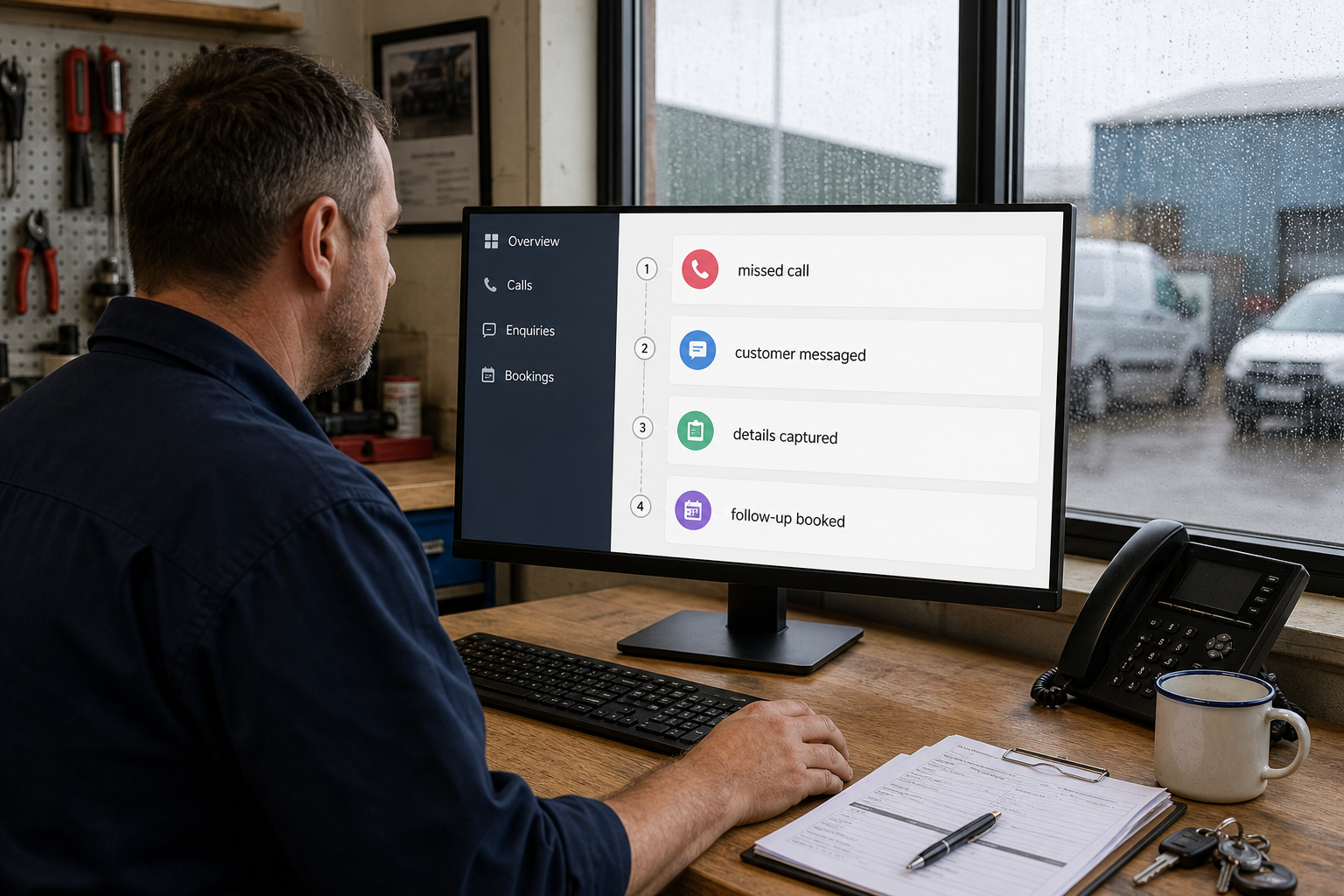
How work should move
This is an example of the system, not a product screenshot. Work arrives in several places. The next step is captured so it does not wait until you get home.
Example process
Calls and follow-up
This is an example process, not a client result. The customer is acknowledged, their details are captured, and you get a clear next step — without leaving the job you are already on.

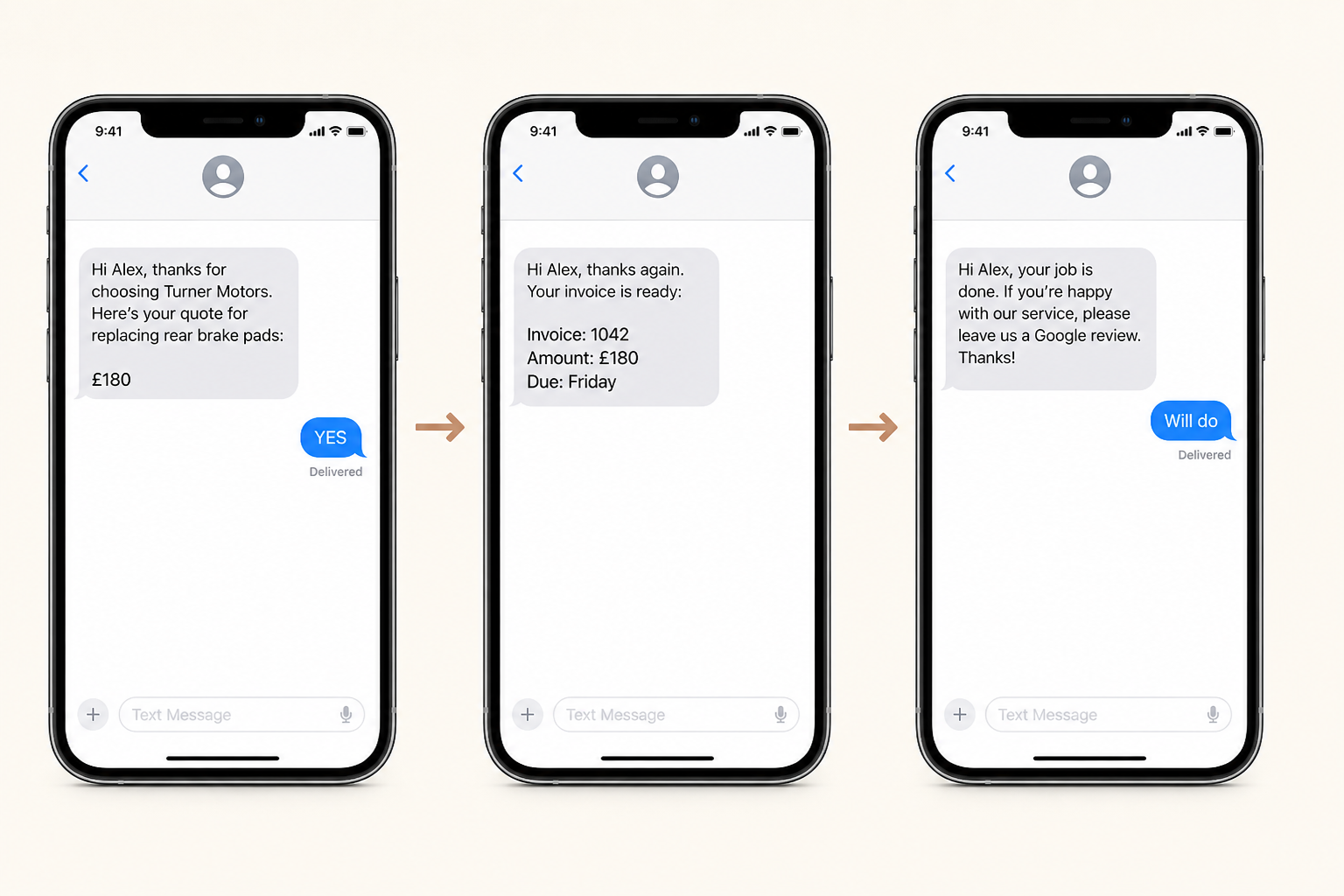
Quotes, invoices and reviews
Another example process: a quote goes out while you are still on the tools, the invoice and reminder follow without chasing, and a review request is sent while the work is still fresh.
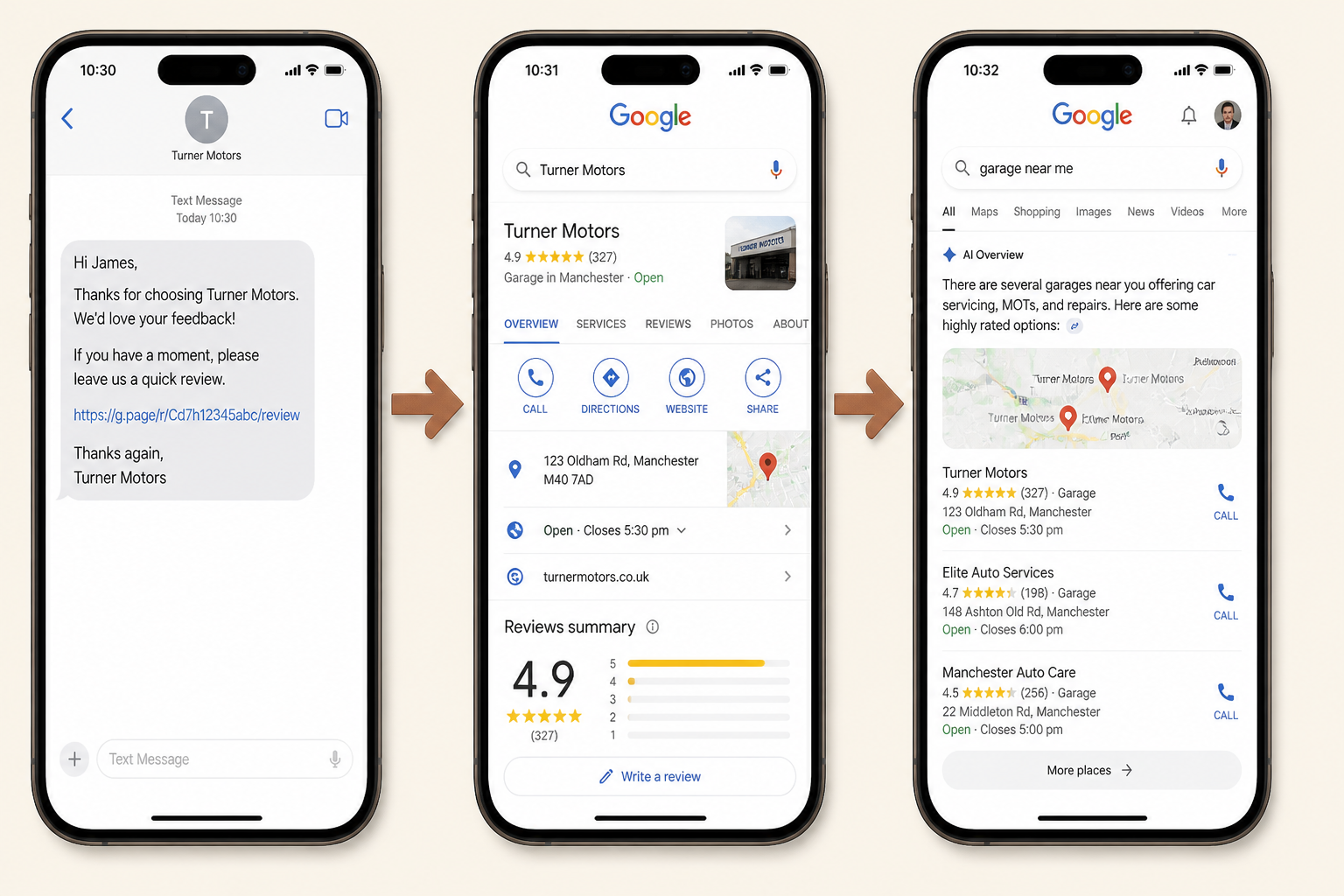
Reviews and how you are found
This example process shows a review request going out after a completed job, reviews landing, and an illustration of how a local business can appear in Google local results and in AI search answers. It is an example of the process — not a ranking claim or a promised result.
You do not need to know what system you need. You just need to know what keeps getting in the way. We look at how work moves through your business, where it gets stuck, and what would make the biggest difference first.
We start with the work your team does every day.
You will see what to fix, why it matters and what to do next.
We do not force your business into someone else’s process.
By the time you call back, they may have already tried someone else.
Phone calls, emails, forms, WhatsApp and Facebook messages are hard to keep track of.
The work gets done, but the admin piles up afterwards.
Small follow-ups fall through the gaps when everyone is busy.
Hiring another admin person feels like the only option.
Each small delay looks manageable on its own. A missed call. A quote sent late. A customer who did not get a reply. A spreadsheet nobody updated. Together, they make the business slower, harder to manage and more dependent on you.
The usual fix is to work later, add another person, or buy another tool. But more people and more software do not help if the handovers between them are still broken.
The answer is not more software. It is understanding the process first.
OwlPoint begins by understanding where your team loses time, where customers slip away, and where you keep having to step in.
Then we recommend the smallest useful change. Sometimes that is a better way to handle calls. Sometimes it is a clearer lead follow-up process. Sometimes it is fixing the handover from quote to invoice.
The aim is simple: make the business easier to run without making it harder for your team to use.
01
When you cannot answer, the customer is acknowledged, their details are captured and the next step is clear.
Best for: busy phones, job sites, front desks and small teams.
02
Every new enquiry is organised and followed up until it becomes a booking, a quote or a clear no.
Best for: businesses where leads arrive through several channels.
03
Reduce the back-and-forth that slows down quotes, approvals, invoices and payment reminders.
Best for: businesses losing time and cash to manual admin.
04
Make it easier to request Google reviews after a completed job or happy customer interaction.
Best for: local businesses that rely on reputation and word of mouth.
05
The Business Process Audit shows where time, opportunities and attention are being lost, then gives you a clear order of priority.
Best for: owners who know something needs to change but are not sure where to begin.
A low-pressure first step before any implementation commitment.
Step 1
We look at one real process, from the first customer contact to the final follow-up.
Step 2
We identify where work is being repeated, delayed, missed or left with you.
Step 3
You get clear priorities: what to fix first, what it should change, and what can wait.
Step 4
If you choose to move ahead, OwlPoint builds around the way your business works and shows your team how to use it.
Lead offer
If your business feels busy but not always in control, this is where to start.
We take one important part of your operation—such as calls, enquiries, bookings, quotes or invoicing—and map what happens now. Then we show you where the delays, dropped handovers and unnecessary admin are coming from.
No need to know the answer before you book. Bring the part of the business that keeps ending up on your evening to-do list.

Respond to new jobs, keep quotes progressing and reduce the admin that follows a day on site.

Make it easier to capture enquiries, confirm appointments and follow up reliably.

Reduce manual chasing and create clearer handovers for clients, documents and next steps.

Keep calls, bookings, estimates and customer updates moving when the workshop is busy.
Every business starts in a different place. The audit is how we identify the improvements that are realistic for yours.
No. You only need to know what is taking too much time, slipping through the gaps or keeping you involved when you should not need to be. The audit is designed to make the next step clear.
No. OwlPoint is focused on UK SMEs where a small improvement to calls, enquiries, booking or invoicing can make a real difference to the owner and team.
The aim is to remove repetitive admin and missed handovers, so your team can spend more time on the work that needs people. It is about making good people more effective, not making them redundant.
Not necessarily. We start with the process and look for the smallest useful change. The audit will show what should be improved first and what can stay as it is.
You receive clear priorities and recommendations. If OwlPoint is the right partner to make the changes, we can scope that separately. If not, you still leave with a useful plan.
The audit is a focused, standalone piece of work. We will confirm the scope and investment before anything begins.
Book a Business Process Audit and get a clear view of what is slowing you down, where customer opportunities are being lost, and what to fix first.
Bring the process that is costing you the most time. We will start there.